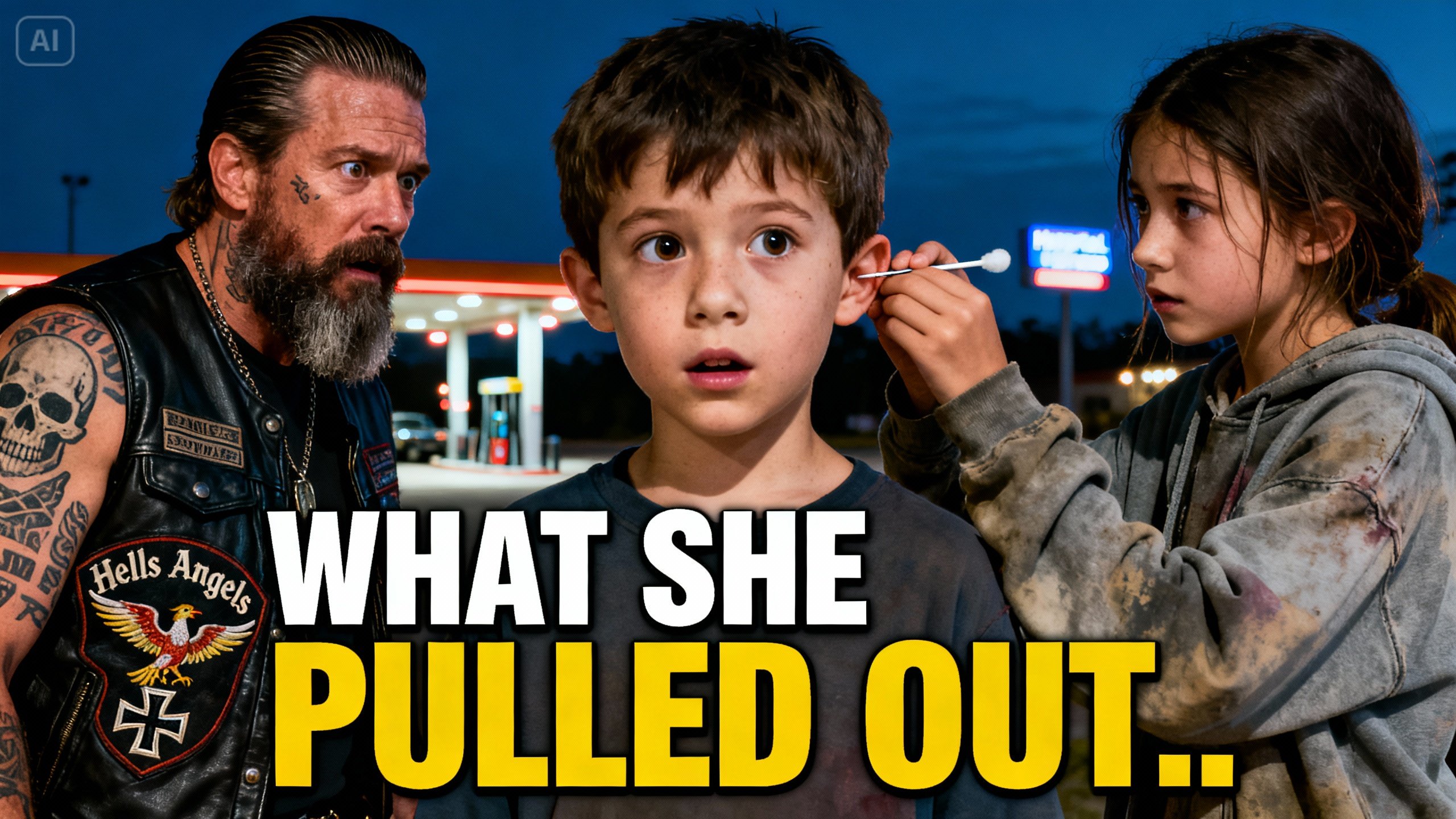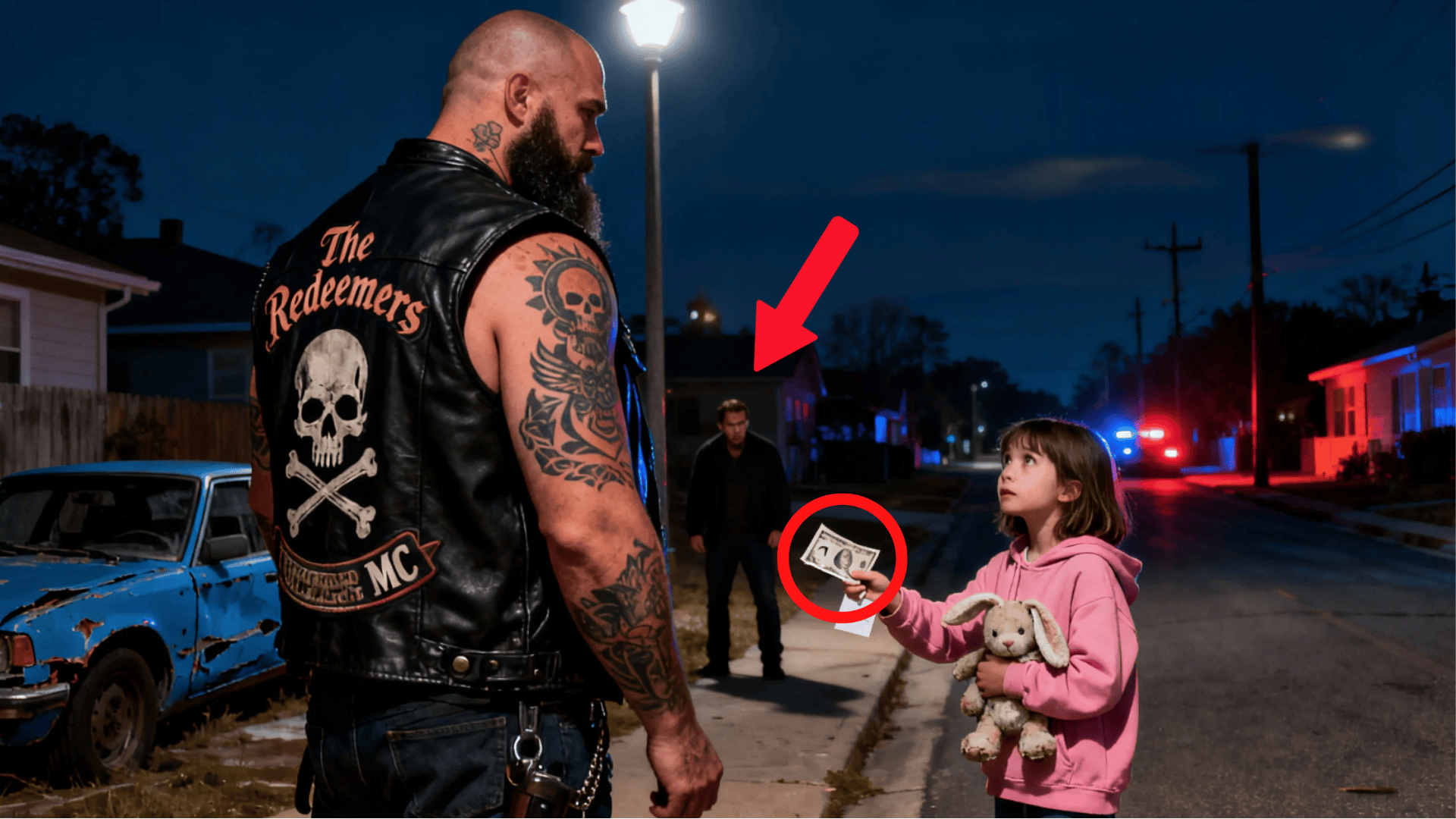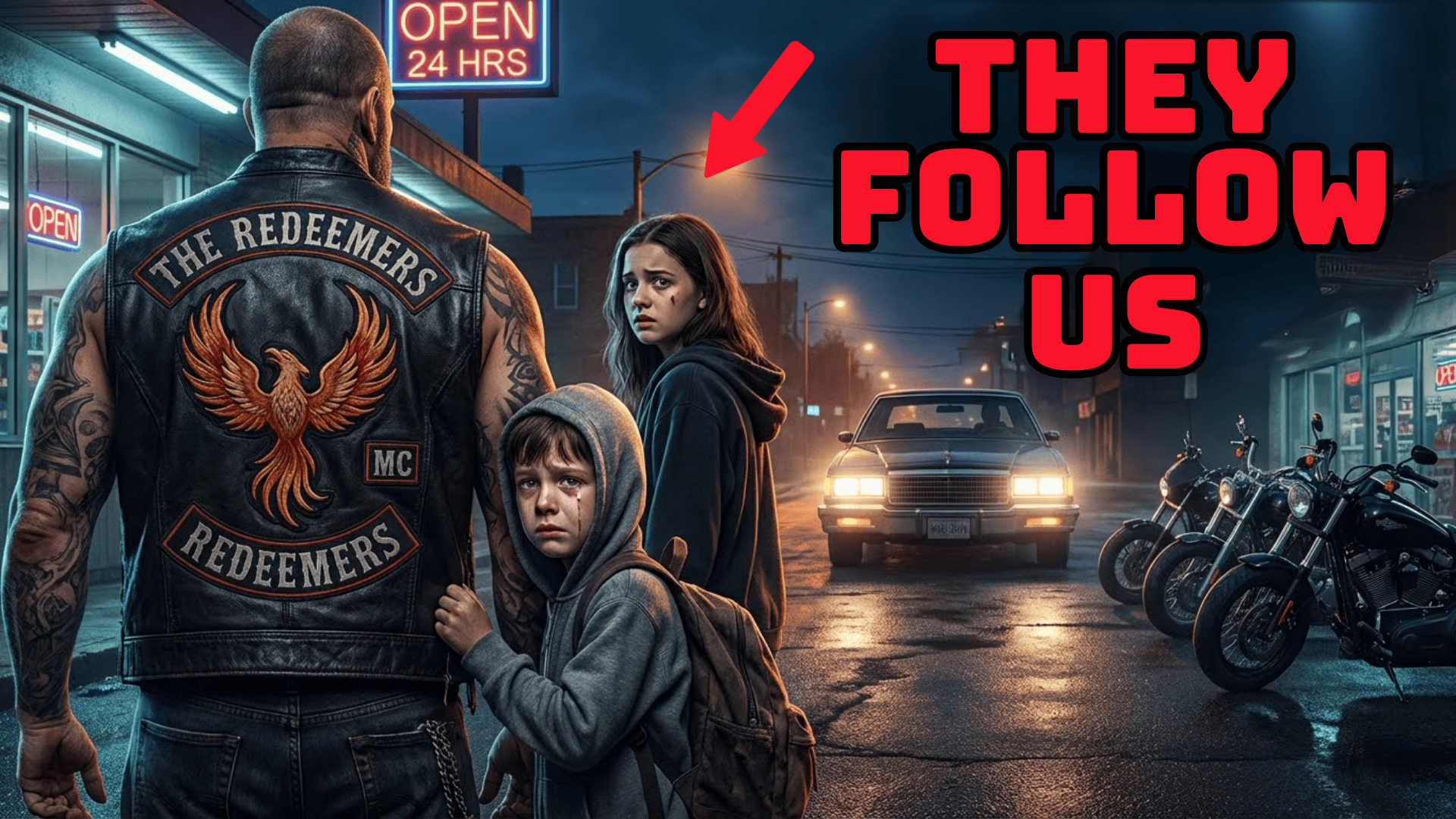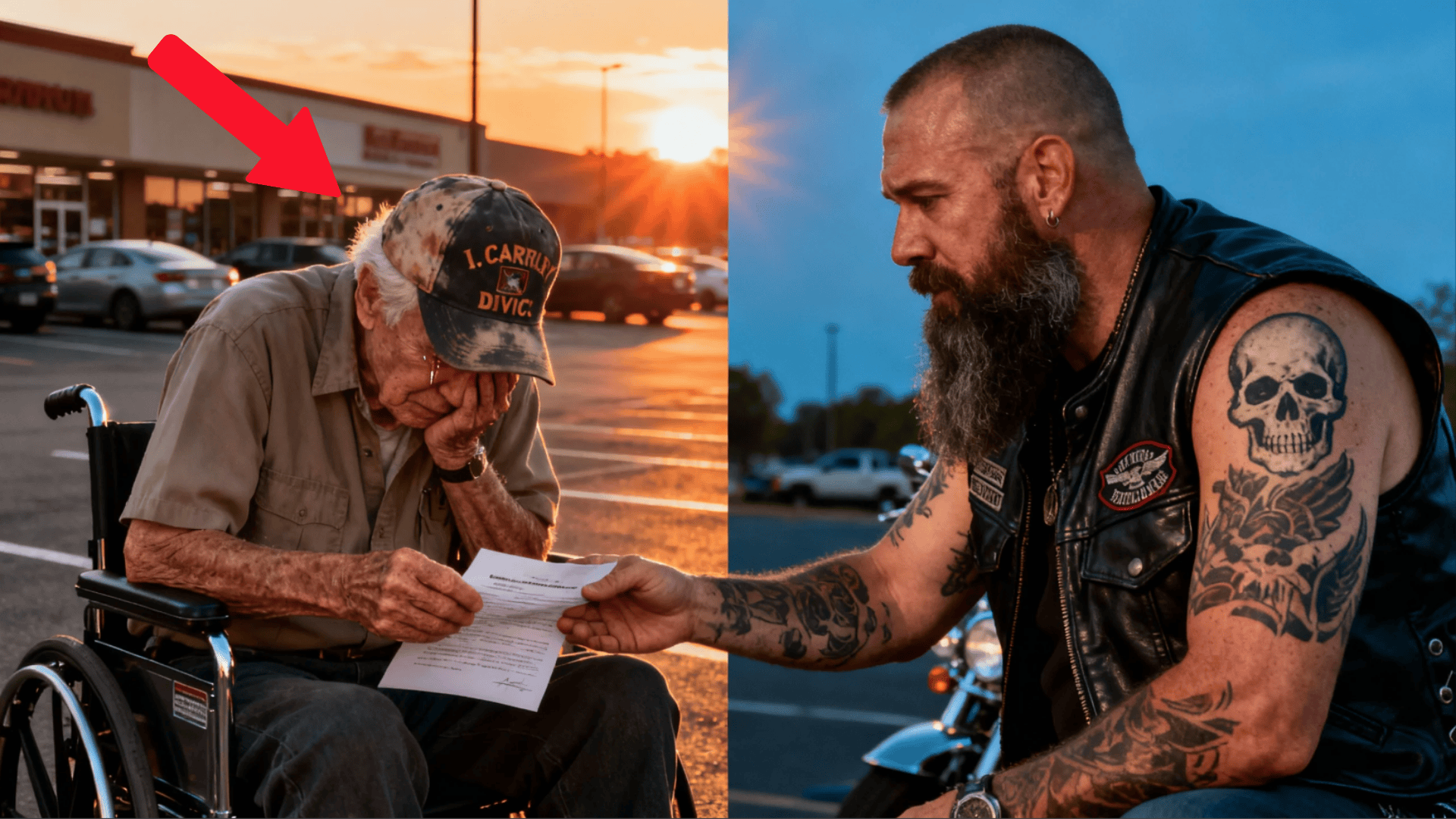
Veteran Cries In Parking Lot | What These Hells Angels Bikers Do Next Changes Everything
When a predator wraps himself in the flag to prey on those who served under it, The Redeemers MC shows him what true patriotism looks like. Marcus Hayes survived the jungles of Vietnam. He survived combat wounds that left him wheelchair-bound. But he never imagined he'd have to survive a con man in his own hometown—one who uses the American flag as bait to trap desperate veterans in predatory loans. With 24 hours until his lifeline is repossessed, Marcus makes a choice he never thought he'd make: he asks strangers for help. In this episode of GENTLE BIKERS, witness how The Redeemers MC delivers justice when a smooth-talking business owner learns that stolen valor and exploitation come with a price—and that some debts can only be paid one way. Sometimes the most patriotic act is protecting those who've already sacrificed everything. 🔔 SUBSCRIBE to see more stories of unexpected heroes 💬 COMMENT below: Where are you watching from? 👍 LIKE if you believe in justice #GentleBikers #BikerJustice #HeartwarmingStories #TheRedeemers #VeteransSupport #hells angels #hellsangels
The afternoon light was dying when we rolled into that strip mall parking lot. Not the peaceful kind of dying—the kind where the sun bleeds orange and red across cracked asphalt and makes everything look tired. Used up. The air had that end-of-day heaviness to it, thick with the smell of old coffee and exhaust fumes from the highway half a mile away. We weren't looking for trouble. We were looking for caffeine. Jake, Crow, and I had been riding for six hours straight, and our bodies were screaming for a break that came with air conditioning and maybe a stale donut if we were lucky.But here's the thing about riding with Hell's Angel's—trouble doesn't care if you're looking for it or not. It finds you anyway. And that day, trouble was wearing a faded "1st Cavalry Division" cap and sitting in a wheelchair next to a storefront that made my stomach turn the second I saw it.The sign was big. Bold. American flags plastered on every window like wallpaper. "CALDWELL AUTO & LOANS - VETERAN OWNED - WE SUPPORT OUR TROOPS!" The exclamation point felt like a slap. The kind of aggressive patriotism that always makes me suspicious because real patriots don't need to shout it from every surface. They just live it. And something about that storefront—with its too-bright banners and its too-perfect slogans—felt wrong. Felt like a costume. Like stolen valor wrapped in vinyl and laminate.Jake killed his engine first. He always does. That's what being the club's sergeant-at-arms means—you're first in, last out, and your eyes are always scanning for threats before the rest of us even swing our legs off our bikes. I watched him pull off his helmet, his tattooed arms catching the dying light, that skull tattoo on his left bicep practically glowing against his sun-darkened skin. His beard was heavy with road dust, and he ran a hand through his slicked-back hair before his eyes locked onto something that made him stop moving entirely.That's when I saw him too. The man in the wheelchair. He was parked right there on the sidewalk, maybe fifteen feet from Caldwell's front door, and he looked... small. That's the word that hit me first, even though it made no sense because this man had the bearing of someone who'd commanded respect his entire life. Broad shoulders, even sitting down. Hands that had clearly done hard work. But there was something about the way he was hunched over that stack of papers in his lap, the way his fingers trembled as they gripped the edges of what looked like a contract, that made him seem diminished. Like the world had spent years trying to make him smaller, and today it had finally succeeded.His "1st Cavalry Division" cap was faded to the point where the yellow of the insignia had turned almost cream-colored. The black fabric was sun-bleached in spots, frayed at the edges. That cap had seen decades of wear. Decades of memories. You don't keep something like that unless it means everything to you. Unless it represents a version of yourself you're terrified of forgetting.Jake noticed the cap before I did. Of course he did. Jake's uncle served in the 1st Cav during Desert Storm, came home with a purple heart and stories he'd only tell when he'd had exactly three beers—not two, not four, exactly three. Jake grew up understanding that certain symbols weren't just fashion. They were earned. They were sacred. So when he saw that cap, his entire demeanor shifted. The suspicious edge he'd been carrying softened into something else. Something that looked a lot like respect.We started walking toward the coffee shop, our boots heavy on the pavement, leather vests creaking with each step. Hell's Angel's patch on our backs caught the last rays of sunlight—that phoenix rising from flames, wings spread wide, fire turning to gold. We must have looked like exactly what we were: road-worn, intimidating, the kind of men people cross the street to avoid. But Jake slowed down as we passed the man in the wheelchair. Slowed down and gave him a nod. Just a small dip of the chin. The universal gesture between those who understand sacrifice.And that's when everything changed.The man looked up. His eyes—Jesus, his eyes were the kind of tired that sleep can't fix. The kind that comes from carrying weight no one else can see. They were red-rimmed, watery, and when they met Jake's, something broke inside them. Like a dam that had been holding back too much for too long finally giving way. His mouth opened slightly, then closed again, like he was fighting against words that desperately wanted to come out but knew they shouldn't. Knew that asking for help from strangers—especially strangers who looked like us—was the last card he had left to play.Jake stopped walking. Crow and I stopped too. The world got very quiet. Even the highway noise seemed to fade into background static. All I could hear was the rustling of those papers in the man's trembling hands and the shallow, shaky breath he took before he finally spoke."Brother..."That one word. That single word carried more weight than any sentence I'd ever heard. It wasn't a plea. Not yet. It was a test. A question. Are you someone who understands? Are you someone who'll see me as more than just a problem to step around?Jake moved closer. Three steps, maybe four, closing the distance until he was standing right in front of Marcus's wheelchair. He didn't crouch down—that would have felt patronizing, like talking to a child. He stood, but his posture was open. His hands hung loose at his sides. Unthreatening. Patient. Waiting."I fought for this country. Thirty months in the jungle. And now this... this man with his flag stickers and his handshake... he's taking everything. My van. My dignity. I just need to get to dialysis. I don't... I don't know what to do anymore."His hands lifted the contract, holding it up like evidence in a trial he'd already lost. The papers shook so badly that the words blurred into wavy lines of black ink on white paper. And then I saw it—the single tear that rolled down his weathered, sun-damaged cheek. It carved a path through road dust and exhaustion, catching the dying light before it dripped off his jaw and disappeared into the fabric of his shirt.Above his head, mocking him with every breath of wind that made it flutter, that goddamn banner: "WE SUPPORT OUR TROOPS!"Jake took the contract from Marcus's hands. Gentle. The way you'd take a photograph from someone showing you their deceased loved one. With reverence. With the understanding that what you're holding isn't just paper—it's pain made tangible. He scanned the first page, his jaw tightening with each line he read. Then he flipped to the second page. The third. His knuckles went white around the edges of the paper.Crow moved in beside me, and I saw his eyes narrow as he read over Jake's shoulder. Crow's the club's treasurer, which means he knows numbers. He knows when something doesn't add up. And the way his expression darkened, like storm clouds gathering before the sky opens up, told me everything I needed to know before Jake even said a word."Two thousand borrowed. Eight thousand five hundred owed. By tomorrow morning."Marcus nodded, a tiny movement that seemed to take all his remaining strength."For my wife's medication. Emergency prescription. Insurance denied it. He said... he said he understood. That he'd been there. That he'd help a brother out."Jake's eyes lifted from the contract to the storefront. To those flags. To that banner. To the man-shaped shadow I could see moving behind the glass door, watching us but not coming out. Watching like a predator watches from the safety of tall grass, waiting to see if the wounded animal has any fight left.And that's when I saw something happen to Jake that I'd only seen a handful of times in the ten years I'd known him. His face went completely still. Not calm—stillness and calm are different animals. Calm is peace. Stillness is the moment before the storm breaks. It's every muscle in your body coiling tight, every thought sharpening into a single point of focus, every ounce of mercy you possess stepping aside to make room for something older and harder and utterly without forgiveness.He handed the contract back to Marcus with both hands, like it was something sacred that needed to be protected."Sir, with all due respect... you're not going to lose your van. You're not going to miss your dialysis. And that man in there—" He nodded toward the storefront. "—is going to learn what happens when you wrap yourself in the flag to prey on the people who bled for it."Marcus stared up at Jake. Disbelief fighting with hope on his face, like he'd forgotten what hope felt like and wasn't sure he could trust it anymore."You... you'd help me? You don't even know me."Jake's hand—that massive, scarred, tattooed hand with the wedding ring that had survived more bar fights than I could count—reached down and rested on Marcus's shoulder. Firm. Steady. The way a father's hand rests on his son's shoulder before sending him into battle."Brother, I know everything I need to know."And in that moment, standing in a dying strip mall parking lot under a blood-orange sky, with a predator watching from behind glass and a veteran's dignity hanging in the balance, Hell's Angel's made a promise. We didn't know exactly how we'd keep it yet. But we would. Because that's what we do. That's who we are.Heroes don't always wear capes. Sometimes they wear leather. And sometimes they show up exactly when you need them most. You need to understand something about Marcus Hayes before this story goes any further. This wasn't just some man sitting in a wheelchair with a bad contract. This was a man who'd spent sixty-seven years building a life brick by brick, sacrifice by sacrifice, only to watch it all get threatened by someone who'd never earned the right to shake his hand, let alone take his dignity. Marcus enlisted in 1968. Eighteen years old, fresh out of high school in a town so small it didn't have a stoplight. He didn't enlist because he wanted to be a hero. He enlisted because his father had served in Korea, his grandfather in World War II, and when your family name has been written in blood across three wars, you don't ask questions about whether you should go. You just go. You pack your bag, kiss your mother goodbye, and you go. Thirty months in Vietnam. Thirty months of jungle rot and monsoons and nights so dark you couldn't see your hand in front of your face but you could hear the enemy moving through the elephant grass fifty yards away. He earned two Purple Hearts—one for shrapnel that's still in his lower back, one for the injury that eventually cost him the use of his legs twenty years later when complications from the wound turned septic and the infection spread faster than the surgeons could cut. He earned a Bronze Star for pulling three men out of a burning APC while taking fire from three directions. He earned the kind of respect that doesn't come with a medal at all—the respect of the men who served beside him and knew he'd die before he'd leave them behind. He came home in 1971. Not to parades. Not to gratitude. To protesters calling him a baby killer at the airport. To a country that wanted to forget the war was even happening, which meant forgetting the men who fought it too. So Marcus did what a lot of veterans did—he put his head down, kept his mouth shut, and built a life anyway. He married Patricia in 1973. She was a nurse at the VA hospital where he went for his back treatments. She saw him at his worst—screaming from phantom pain at three in the morning, crying from nightmares he couldn't explain, angry at a world that had taken his youth and given him nothing but scars in return. And she stayed anyway. Forty-two years she stayed. Through the good times and the times when there wasn't enough money for good. Through his transition to the wheelchair when he was forty-seven and thought his life was over. Through her own cancer scare five years ago that damn near bankrupted them even with insurance. The van. That goddamn van. It was twelve years old, had a hundred and eighty thousand miles on it, and the modified wheelchair lift made a grinding noise that probably meant it would need replacing soon. But it was his independence. His freedom. The difference between being a man who could get to his dialysis appointments three times a week and being a prisoner in his own home waiting for rides that might not come and definitely wouldn't come with dignity attached. Without that van, Marcus couldn't get to the VA medical center thirty miles away. Couldn't get to his dialysis treatments that kept his failing kidneys from shutting down completely. Couldn't take Patricia to her own doctor's appointments for the arthritis that made her hands curl like claws on bad days. Couldn't get groceries. Couldn't live. Not really. Not in any way that mattered. So when Patricia's prescription came back denied by insurance—some bureaucratic bullshit about the medication being "experimental" even though she'd been taking it for three years and it was the only thing keeping her heart rhythm stable—Marcus did what any man would do. He looked for money. Fast money. Emergency money. And that's when Derek Caldwell's smiling face showed up on a Facebook ad that promised "HELP FOR VETERANS - FAST APPROVAL - NO CREDIT CHECKS - WE TAKE CARE OF OUR OWN." Marcus called the number. Caldwell answered on the second ring, voice smooth as honey, warm as a brother's hug. Told Marcus to come right down. Told him they'd figure it out together. Told him that as a fellow veteran—Caldwell claimed he'd served in the Army, deployed to Afghanistan, understood the bond—he'd make sure Marcus got what he needed. That's what brothers do, right? Take care of each other. Except Derek Caldwell never served a goddamn day in his life. Caldwell was forty-two years old and had spent his entire adult life finding ways to make money off other people's desperation. Started with payday loans in low-income neighborhoods. Moved to used car sales with interest rates that would make a mob loan shark blush. Then he figured out the formula that would make him truly rich: wrap yourself in the flag, claim veteran status, target old soldiers who still believed in the brotherhood, and bleed them dry while shaking their hands and calling them "hero." The operation was simple. Caldwell would offer loans with "flexible terms" and "veteran-friendly rates." He'd bond with his marks over fabricated deployment stories—he kept a script in his desk drawer with just enough military jargon to sound convincing to someone who wanted to believe. He'd make them feel seen, understood, respected. Then he'd have them sign a contract with interest rates that compounded daily, hidden fees buried in sub-clauses on page seven, and balloon payments designed to be impossible to meet. When they inevitably couldn't pay, he'd seize whatever collateral they'd put up—usually their car or truck, sometimes their home—and resell it for triple what they'd borrowed. Then he'd move on to the next desperate veteran who walked through his door. He'd been doing this for eight years. He had a whole wall in his office covered with photos of himself shaking hands with veterans, arms around their shoulders, big smile on his face like he gave a damn about anything except their signature on the dotted line. He even had a photo of himself in front of an American flag, wearing a flag pin on his lapel, holding a sign that said "PROUD TO SERVE THOSE WHO SERVED." The irony was so thick you could choke on it. And when people tried to fight back? When they realized they'd been conned and came looking for justice? That's when Tony showed up. Tony was Caldwell's enforcer—six feet of muscle wrapped in a cheap suit, with a face that had forgotten how to smile and eyes that had seen the inside of more than one county jail. He didn't break bones—that was too obvious, too legal. He just... visited. Showed up at people's homes at night. Stood in their driveway. Made sure they understood that fighting back would cost more than just money. Made sure they understood that guys like Caldwell always win because guys like them could afford to be patient and cruel in equal measure. Tony had already been to Marcus's house twice. First time was three days after Marcus signed the contract, when he called Caldwell's office asking questions about the interest rate that seemed wrong. Tony showed up that evening, knocked on the door, and when Marcus answered, Tony handed him a copy of the contract with certain sections highlighted in yellow. Sections about "immediate seizure of collateral" and "legal action including but not limited to criminal charges for fraud." He didn't say a word. Just handed over the papers, looked Marcus dead in the eye for ten long seconds, then walked away. The second time was yesterday. Patricia answered the door because Marcus had been at dialysis. Tony told her that her husband had twenty-four hours to come up with the full payment or they'd be coming for the van. Patricia—this woman who'd survived cancer and forty-two years of loving a broken warrior—stood in that doorway and cried. Not because she was scared of Tony. But because she knew Marcus would rather die than fail her. And she knew that stress was the worst thing for his already-failing heart. That's what brought Marcus to that parking lot today. He'd driven there—probably the last time he'd drive anywhere if Caldwell had his way—because he couldn't just sit at home and wait for Tony to show up with a tow truck. He'd driven there with some desperate, impossible hope that maybe he could reason with Caldwell. Appeal to his humanity. Remind him that they were brothers in arms, that the code meant something, that a man's word was supposed to mean something. But Caldwell wouldn't even come outside. Marcus had been sitting there for forty-five minutes before we rolled up, and Caldwell had looked at him through that glass door exactly twice. Both times with a smirk that said everything Marcus needed to know about how this was going to end. So Marcus sat there in his wheelchair, staring at that contract, trying to figure out if there was any move left on the board that didn't end with him losing everything. And that's when we showed up. Three bikers looking for coffee and finding something that mattered a hell of a lot more. Jake folded the contract carefully and slipped it into the inside pocket of his leather vest. Marcus watched him do it, confusion mixing with that dangerous thing called hope on his weathered face. "What... what are you going to do?" Jake looked at Crow and me. We didn't need words. Didn't need a plan spelled out in detail. We'd ridden together long enough to speak in glances and nods and the kind of understanding that only comes when you've trusted someone with your life more times than you can count. "First, we're going to get you somewhere safe. Somewhere comfortable where you can breathe for a minute without looking over your shoulder." Crow pulled out his phone, already scrolling through contacts. "My sister's place is ten minutes from here. She's a nurse, works nights, house is empty right now. Marcus, you and your wife can wait there while we handle this." Marcus shook his head, that stubborn pride that had kept him alive through thirty months of hell flaring up despite everything. "I can't ask you to—" "You're not asking. We're offering. Big difference." I pulled my bike up closer, positioned it so that I was blocking the sightline from Caldwell's storefront to where Marcus sat. Just in case Tony or Caldwell himself decided to make an appearance. Just in case this got ugly before we wanted it to. "Marcus, do you know where Caldwell lives?" Marcus nodded slowly. "Got his address off the contract. Why?" I felt my own jaw tighten, felt that familiar cold focus settling into my bones. The same focus that came right before a bar fight you knew was coming but tried to avoid anyway. The same focus that separated men who talked about justice from men who delivered it. "Because Derek Caldwell is going to learn something tonight that nobody ever taught him growing up. He's going to learn that when you wrap yourself in the flag to prey on the men who bled for it, eventually someone shows up to collect the debt." Jake's hand was still on Marcus's shoulder, steady as a heartbeat. "Sir, I need you to trust us. Can you do that?" Marcus looked up at Jake, then at Crow, then at me. His eyes moved over our leather vests, our patches, our tattoos, our faces that probably looked harder and more dangerous than anyone he'd trusted in a long time. But here's the thing about men who've been to war—they know how to read other men. They know the difference between someone who's dangerous because they like hurting people and someone who's dangerous because they refuse to let evil win. Marcus's voice came out steady for the first time since we'd met him. "I can do that." Jake pulled out his phone, took a photo of the contract page with Caldwell's business license number visible, then took another photo of the storefront with all those flags and that mocking banner. Evidence. Not for the police—cops didn't care about this kind of crime, and we all knew it. Evidence for later. For leverage. The sun was almost gone now. The parking lot lights were starting to flicker on, casting everything in harsh yellow sodium light that made the world look sickly and unreal. Inside Caldwell's storefront, I could see movement. Someone pulling blinds down. Getting ready to close up for the day and go home to whatever nice house his blood money had bought him. But he wasn't going home yet. Not if we had anything to say about it. "Marcus, by this time tomorrow, you're going to have your van, your wife's going to have her medication, and Derek Caldwell is going to wish he'd never heard your name." And with that promise hanging in the air like smoke, thick and undeniable, we started the next phase. The part where Hell's Angel's did what we do best: reminding predators that sometimes the prey has fangs too. The thing about confrontation is that most people get it wrong. They think it's about volume—who can shout the loudest, who can get in someone's face, who can throw the first punch. But real confrontation, the kind that changes outcomes and breaks predators, isn't loud at all. It's quiet. It's calculated. It's the difference between a wildfire that burns out fast and a slow smolder that consumes everything in its path and leaves nothing but ash. We got Marcus to Crow's sister's place first. Made sure he and Patricia were safe, comfortable, had food and water and knew they weren't going anywhere near that strip mall until morning. Patricia cried when we left—not sad tears, but the kind that come when you've been carrying weight for so long that having someone else lift it, even temporarily, feels like a miracle you don't deserve but need desperately anyway. Marcus shook each of our hands with both of his, grip still strong despite the tremor, and said nothing because there was nothing to say that we didn't already understand. Then we went back. But we didn't go alone. Jake made four phone calls on the ride back. Four calls that lasted less than thirty seconds each. No explanations needed. Just coordinates, a time, and two words: "Redeemers business." That's all it took. Because when you're part of something bigger than yourself—when you're part of a brotherhood that actually means something—you don't need PowerPoint presentations and committee meetings to decide if you're showing up. You just show up. By eight-fifteen PM, there were eleven of us. Eleven Redeemers MC members in full colors, arranged in a semicircle around Caldwell's storefront like a noose slowly tightening. We didn't block the exits—that would have been illegal, and we're careful about that line. But we made it real clear that if Derek Caldwell wanted to leave, he'd have to walk past every single one of us to get to his car. And something about that walk, about running that gauntlet of leather and tattoos and cold stares, seemed to rob him of the courage to try. I could see him through the window. Pacing. Phone pressed to his ear. Probably calling Tony, telling him to get down here, that there was a situation. But Tony wasn't coming. Crow had made sure of that with a call to a friend who knew where Tony drank on Tuesday nights. Let's just say Tony got a very clear message that tonight was not the night to play enforcer for a con man. That message came from guys who made Tony look like a middle school bully, and he took it to heart real fast. So Caldwell was alone. Alone with his flags and his stolen valor and his predatory contracts, and for the first time in his comfortable, consequence-free life, he was realizing that sometimes debts come due in ways you can't lawyer your way out of. Bear arrived last. Bear's our president, the man whose name carries weight not just in our club but in every club within two hundred miles. He's sixty-one years old, been riding since before half of us were born, and he has this quality that's hard to put into words. It's not aggression. It's certainty. The absolute unshakeable knowledge that when he decides something is going to happen, reality bends to accommodate him, not the other way around. He pulled his bike up front and center, killed the engine, and sat there for a moment. Just sat. Let the silence build. Let Caldwell sweat behind that glass door, watching this massive silver-bearded man with arms the size of most people's thighs, covered in ink that told stories Caldwell couldn't begin to understand, just... waiting. Patient as death itself. Finally, Bear swung his leg off his bike. The movement was deliberate, unhurried. He straightened his vest, adjusted his rings—three of them, thick silver bands that had dented more than one jaw in their time—and walked to Caldwell's front door. His boots sounded like hammers on the pavement. Every step echoed in that parking lot like a countdown to something inevitable. He didn't knock. He just stood there, hands hanging loose at his sides, and stared through the glass at Caldwell with the kind of look that makes men confess to crimes they didn't commit just to make it stop. Thirty seconds passed. A minute. Caldwell was frozen behind his desk, phone still pressed to his ear even though whoever was on the other end had clearly hung up or given up or both. His eyes were locked on Bear, and I could see the exact moment his brain finished calculating the odds and came back with an answer he didn't like. Because here's what Caldwell understood in that moment: he could call the cops, sure. And the cops would come, and they'd ask what the problem was, and Bear would smile politely and say we were just having a conversation with a local business owner about community standards. No threats made. No property damaged. Just eleven concerned citizens exercising their First Amendment right to peaceful assembly. And after the cops left—because they would leave—we'd still be here. And Caldwell would still have to answer for what he'd done. The door lock clicked. Slowly. Like Caldwell's hand was fighting against his own survival instinct that was screaming at him not to open that door. But predators are fundamentally cowards, and cowards need to know there's still a way out, still a chance to negotiate, still a possibility they can talk their way free. So he opened the door. "Derek Caldwell." It wasn't a question. It was a statement. A confirmation. The way a judge says your name before reading your sentence. "I don't know what you think you're doing here, but I run a legitimate business, and if you don't—" "Marcus Hayes." Two words. That's all it took. Caldwell's face went white. Not pale. White. The color of bone, of ash, of things that have had the life burned out of them. His mouth opened and closed like a fish drowning in air. "I... that's a confidential client matter. I can't discuss—" "You told him you were a veteran." Silence. The kind that's so heavy it has weight. The kind that presses down on your chest and makes breathing feel like work. "I support veterans. My business model is specifically designed to help—" "What unit did you serve with, Derek?" Caldwell's eyes darted left, right, looking for an escape route that didn't exist. His hand gripped the door frame so tight his knuckles went white. "I don't have to answer your questions. This is private property and I'm asking you to—" Bear took one step forward. One single step. He didn't raise his voice. Didn't make a threatening gesture. He just moved into Caldwell's space by exactly eighteen inches, and somehow those eighteen inches contained more threat than a loaded gun. "I'm going to ask you one more time, Derek. And I want you to think very carefully before you answer, because I already know the truth. What unit did you serve with?" Caldwell's breathing was audible now. Short, shallow gasps. His flag pin caught the light, glinting like a knife, mocking him with every breath. "I... I didn't serve. But I support those who—" "You told Marcus Hayes you understood. That you'd been there. That you were brothers in arms." "It's just... it's just marketing. It's what people want to hear. It makes them trust—" The temperature in that doorway dropped about forty degrees. I was standing twenty feet away and I felt it. Felt the way the air changed when Bear's patience finally found its limit. "You stole his valor to steal his money. You wrapped yourself in the flag that better men died for so you could prey on the ones who survived." Jake stepped up beside Bear, contract in hand. He held it up so Caldwell could see it clearly. "Two thousand dollars borrowed. Eight thousand five hundred owed. Four hundred and twenty-three percent interest compounded daily. Fees for processing, fees for documentation, fees for fees. You knew he couldn't pay it. That was the whole point." Crow joined them on the other side. Three Redeemers standing shoulder to shoulder, blocking out the light, creating a wall of leather and ink and absolute conviction. "You sent Tony to his house. Threatened a sixty-seven-year-old man in a wheelchair and his wife who just survived cancer. Made them afraid in their own home." Caldwell was shaking now. Visible tremors running through his whole body. The carefully constructed persona—the businessman, the patriot, the helper of veterans—was crumbling like wet paper. What was left underneath was exactly what we expected: nothing. A hollow man who'd built his entire life on exploitation and found out too late that some debts can't be escaped. "Look, I can... we can work something out. I can adjust the terms. I'll tear up the contract and—" "You'll do more than that." Bear pulled a piece of paper from his vest. Unfolded it slowly. I recognized it—Crow had drafted it on his phone while we were getting Marcus settled, then printed it at a twenty-four-hour FedEx. It was simple. Clear. No legal jargon to hide behind. "You're going to sign this. It states that Marcus Hayes owes you nothing. That his debt is satisfied in full. That you will not contact him, his wife, or anyone in their family ever again. That you will not send Tony or anyone else to their home. That you will return any collateral claims you have on his vehicle immediately." "I can't just... that's eight thousand dollars. I have operating costs. Employees. I can't just give away—" "You made that money disappear on paper when you filed your taxes. You're not giving away anything except the lie that you're owed something in the first place." Caldwell's eyes went to the parking lot, to all of us standing there in formation. Eleven men. Eleven sets of eyes watching him. Eleven witnesses to his choice. And here's the thing about predators—they're excellent at math when the equation suddenly includes their own skin. "You have two choices, Derek. One: you sign this paper right now, we walk away, and you get to keep running your little operation. You'll think twice before you target veterans again, but you'll survive. Two: you refuse, and we start making phone calls. To the Better Business Bureau. To every veterans' organization in the state. To every news station that loves a good story about stolen valor and predatory lending. We'll put your face on every social media platform with every detail of how you operate. We'll make sure that when people Google your name, the first thing they see is the truth about who you really are." Bear leaned in closer, his voice dropping to barely above a whisper. "And Derek? We're patient. We're organized. And we don't forget. Ever. So every time you think about running another scam, every time you see a veteran walk into your office, you're going to remember this moment. You're going to remember that there are men who consider protecting those veterans a sacred duty. And you're going to ask yourself if the money is worth what happens when we come back." The silence that followed was absolute. Even the highway noise seemed to fade away. The world narrowed down to one man standing in a doorway, holding a piece of paper, making a choice about what kind of person he wanted to be when the consequences were finally real. Caldwell's hand shook as he took the paper. Shook as he read it. Shook as he walked back to his desk and picked up a pen. He signed his name in letters that looked nothing like the confident scrawl on Marcus's original contract. This signature was small. Defeated. The signature of a man who'd finally met something he couldn't con his way past. He handed the paper back to Bear. Bear examined it carefully, making sure every line was complete, every signature legitimate. Then he folded it and put it back in his vest. "One more thing." Caldwell looked up, and for a moment I almost felt sorry for him. Almost. But then I remembered Marcus's face. The tear rolling down his cheek. The tremor in his hands. The desperation in his voice. And that almost-pity evaporated like spit on a hot engine. "You're going to give Marcus Hayes two thousand dollars in cash. That's what he borrowed. That's what he needed for his wife's medication. You're going to put it in an envelope and you're going to have it ready by noon tomorrow. We'll pick it up. And Derek? It will be cash from your own pocket, not from your business account. This is personal. This is you making right what you made wrong." "That's... that's extortion. You can't—" "No, Derek. Extortion is what you did to Marcus. This is justice. There's a difference. Sign the paper." Caldwell signed again. This time acknowledging the two-thousand-dollar repayment. His hand was shaking so badly the signature was barely legible, but it was there. Legal. Binding. Bear took that paper too. Then he did something I'll never forget. He reached out and straightened Caldwell's flag pin. The gesture was almost gentle. Almost paternal. But the words that came with it were anything but. "Men like Marcus Hayes earned the right to wear that flag. You didn't. Every time you put that pin on your chest, you're spitting on their sacrifice. So here's my advice: take it off. Right now. And never wear it again." Caldwell's fingers fumbled with the pin. It took him three tries to get it unclasped, his hands were shaking so badly. He held it in his palm like it was burning him, like it was evidence at a trial, like it was the weight of every lie he'd ever told crystallized into cheap metal and enamel. "Good. Now here's how tomorrow is going to work. Noon, we come back. You have the money ready. You have all documentation related to Marcus Hayes ready. Every contract, every note, every piece of paper with his name on it. We take all of it, and then we leave. And you never speak his name again. Are we clear?" "We're clear." "Say it like you mean it, Derek." "We're clear!" Bear nodded once. Then he turned and walked back to his bike. Jake and Crow followed. One by one, the rest of us mounted our machines, fired them up, let the engines rumble and roar like thunder contained in chrome and steel. We didn't peel out. Didn't showboat. We just rode away in formation, leaving Derek Caldwell standing in his doorway, surrounded by his flags and his lies, holding a pin he'd never earned and understanding for the first time in his comfortable life what it meant to be held accountable. As we rode through the night, engines singing in harmony, I thought about Marcus sitting in Crow's sister's living room, probably unable to sleep, probably convinced that tomorrow would bring the same crushing defeat as yesterday. I thought about Patricia holding his hand, both of them trying to be brave for each other, trying not to think about what life would look like without that van, without independence, without dignity. And I thought about Derek Caldwell, alone in his office, staring at the papers he'd signed, understanding that the world he'd built on exploitation had just gotten a whole lot smaller and a whole lot more dangerous. Justice doesn't always come from a courtroom. Sometimes it comes from eleven men on motorcycles who decide that enough is enough. That there's a line you don't cross. That some people are worth protecting, even if you've never met them before. Especially if you've never met them before. Because that's what separates the good guys from the bad guys in this life. The good guys show up when they're not required to. When there's nothing in it for them except the knowledge that they did the right thing. And the bad guys? They sign papers with shaking hands and learn that stolen valor comes with a price they can't afford to pay. Noon the next day came with the kind of sunshine that makes you squint, the kind that feels too bright for the weight of what we were about to do. We rolled back into that strip mall parking lot—just five of us this time. Bear, Jake, Crow, myself, and Razor, who we brought along because Razor has a law degree he never uses except for moments exactly like this one. Moments where having someone who can read the fine print and spot the loopholes means the difference between justice and getting played. Caldwell was waiting. He'd probably been waiting since dawn, unable to sleep, unable to eat, unable to do anything except replay last night over and over in his head and wonder if we'd actually show up or if this was all some nightmare he'd wake up from. But we showed up. We always show up. That's the difference between men who make promises and men who keep them. He looked smaller in the daylight. Smaller and older, like fear had aged him overnight. His suit was rumpled—same one from yesterday, which meant he probably never went home. His eyes were red-rimmed and sunken. His hands shook as he held out a manila envelope that looked too thin to contain everything Marcus had lost but somehow held exactly what we'd demanded. "It's all here. Two thousand dollars. Cash. And all the documentation on Marcus Hayes. Every contract. Every note. Everything." Razor took the envelope. Opened it carefully. Counted the bills twice—once quickly, once slowly. Then he examined each piece of paper, reading through every clause, every signature line, every date stamp. This took fifteen minutes. We stood there in silence while Razor did his work, and Caldwell stood there sweating, probably wondering if we'd find something wrong, some excuse to come back, some reason why this still wasn't over. But it was all there. Clean. Complete. Marcus's original contract with "DEBT SATISFIED - PAID IN FULL" stamped across it in red ink. The predatory loan agreement marked "VOID - NULL AND UNENFORCEABLE." A signed statement from Caldwell releasing any and all claims to Marcus's van, his property, his anything. And the two thousand dollars in crisp hundred-dollar bills that would go right back into Marcus's hands—the same money he'd borrowed, returned clean, like the nightmare had never happened. "It's legitimate. Everything's here." Bear nodded. Then he looked at Caldwell with an expression that wasn't quite satisfaction and wasn't quite contempt. It was something heavier. Something that felt like a judge delivering a sentence that would last longer than any prison term. "Derek, you and I are never going to be friends. You're never going to be the man you pretended to be. But you've got a choice now about what happens next. You can learn from this. You can stop preying on veterans. You can take down those flags you never earned the right to fly and run an honest business. Or you can keep doing what you've been doing, and eventually someone else will show up who's not as patient as we are." Caldwell nodded. Didn't speak. Probably couldn't speak. His throat was working, jaw clenching and unclenching, like he was trying to swallow words that would only make things worse. "We'll be watching. Not because we want to. But because men like Marcus Hayes deserve to know that somebody's got their back. Even after we ride away. Especially after we ride away." We turned to leave. But Jake stopped. Turned back. Pulled something from his vest pocket—a card, simple and plain, with just a phone number on it. "You ever hear about someone else getting conned by predatory lenders targeting veterans, you call that number. You hear about stolen valor, you call that number. You want to do one decent thing with your life to balance out all the indecent things you've already done, that's how you start." He placed the card on Caldwell's desk. Caldwell stared at it like it was a live grenade. And then we left. Got on our bikes, fired them up, and rode away from that strip mall for the last time, leaving Derek Caldwell standing in his empty office surrounded by the pieces of the empire he'd built on suffering, finally understanding that some fortunes cost more than they're worth. We pulled up to Marcus and Patricia's house at three PM. The van was still in the driveway—nobody had come to repo it, and nobody ever would now. We could see movement through the front window, could see Marcus's wheelchair silhouette, could imagine the anxiety that must have been eating them both alive for the past twenty-four hours, wondering if three strangers on motorcycles could actually deliver on an impossible promise. Bear knocked. Three solid raps that sounded like certainty made audible. Patricia answered. She was seventy-one years old, silver hair pulled back in a neat bun, wearing a cardigan despite the warmth, and her eyes went wide when she saw us. Wide with fear that melted instantly into something else when Bear held up the manila envelope. "Mrs. Hayes, is Marcus home?" She didn't answer with words. Just turned and called out, voice shaking with something that sounded dangerously close to hope. "Marcus! Marcus, they're here!" Marcus wheeled himself to the door. He still had that 1st Cavalry Division cap on—probably hadn't taken it off since we left him yesterday. His eyes searched our faces, looking for the answer before we could speak it. Looking for confirmation that this wasn't a cruel joke, wasn't another way the universe had found to kick him while he was down. Bear knelt. Actually got down on one knee so he was at eye level with Marcus, so there was no looking down, no power dynamic, just one man speaking directly to another man with the respect he deserved. "Sir, your debt is settled. Caldwell signed papers releasing you from everything. You don't owe him a penny. Your van is yours. Your dignity is yours. And this—" He handed Marcus the envelope with the two thousand dollars inside. "This is what you borrowed. What you actually needed. It's yours. Clean. No strings. No interest. No predators waiting in the shadows." Marcus's hands took the envelope. Opened it with trembling fingers. Saw the cash. Saw the contracts marked VOID. Saw the signed statement from Caldwell. And then he did something that broke every single one of us standing there on that porch. He cried. This man who'd survived Vietnam, who'd endured thirty months of hell, who'd rebuilt his life after losing the use of his legs, who'd carried weight and pain and responsibility for sixty-seven years without complaint—he put his face in his hands and cried. Deep, shaking sobs that came from somewhere so far down inside him that they probably predated Caldwell, predated the loan, predated everything except the fundamental relief of finally, finally being safe. Patricia's hand went to his shoulder. She was crying too, silent tears rolling down her lined face, one hand covering her mouth like she was trying to hold in sounds that were too big to contain. They held each other like that for what felt like an hour but was probably thirty seconds, these two people who'd survived everything life threw at them, finally able to breathe. When Marcus looked up, his eyes were clear. Red, but clear. And he looked at each of us—Bear, Jake, Crow, Razor, me—like he was memorizing our faces. Like he was burning this moment into his memory so deep that nothing could ever erase it. "I don't know how to thank you. I don't know what I could possibly say or do that would—" "You already did it, brother. You served. You carried weight for this country when it asked you to. That debt can never be repaid, but maybe we just balanced the scales a little. Maybe we just reminded the world that some debts are sacred, and the men who paid them deserve to live without predators stealing what's left." Marcus saluted. Right there in his wheelchair, in his doorway, with tears still wet on his face, he brought his hand up in a perfect military salute that probably hurt his aging shoulder but he held it anyway, held it firm and proud. And Bear—this massive, intimidating man covered in tattoos and leather and the weight of a thousand hard roads—returned it with equal precision. Equal respect. Equal recognition of what that gesture meant. We didn't stay long after that. Didn't need to. The job was done. The debt was settled. Marcus and Patricia had their life back, had their dignity back, had their tomorrow back. That was enough. That was everything. As we rode away, I looked back once. Saw Marcus and Patricia standing together in their doorway—her standing, him sitting, both of them watching us leave, both of them waving like we were family heading home after Sunday dinner. And maybe we were family. Not by blood. But by something deeper. By the understanding that some people are worth protecting, and some fights are worth having, and some promises are worth keeping no matter what they cost. The sun was starting its descent toward evening, painting everything in shades of gold and amber. Our engines hummed in harmony as we rode away from that quiet suburban street, carrying with us the knowledge that today, at least, we'd made the world a little less cruel. And somewhere behind us, in a strip mall office surrounded by flags he'd never earned, Derek Caldwell was learning to live with the consequences of his choices. Learning that stolen valor and predatory greed eventually find their price. Learning that justice doesn't always come from a courtroom or a badge. Sometimes it comes on two wheels, wearing leather, and it doesn't leave until the scales are balanced. Here's what I want you to understand about this story. It's not really about Derek Caldwell getting what he deserved, even though he did. It's not even about Marcus Hayes getting his life back, even though he absolutely did. This story is about something bigger. Something that matters more than one predator or one victim or one intervention on one Tuesday afternoon in a forgotten strip mall parking lot. This story is about the choice we make every single day about what kind of world we want to live in. Because here's the truth that nobody wants to say out loud: evil doesn't win because it's strong. Evil wins because good people decide it's not their problem. Because someone else will handle it. Because getting involved is risky and complicated and might cost you something you're not willing to pay. Marcus Hayes fought for this country. He gave thirty months of his youth, the use of his legs, and pieces of his soul that he'll never get back. He did that for people he'd never meet, in places he'd never see again, because someone told him it mattered. Because someone told him that protecting the vulnerable and standing against tyranny was worth bleeding for. And then he came home to a country that forgot him. To a system that let predators like Derek Caldwell wrap themselves in the flag he'd bled for and use it as camouflage to hunt the very men who'd defended it. That's not just wrong. That's obscene. That's a betrayal so deep it makes you question everything you thought you knew about honor and justice and whether any of it actually means anything. But here's the thing about betrayal: it only wins if nobody shows up to stop it. And Hell's Angel's? We show up. Not because we're heroes. Not because we're perfect. We're not. We're just men who decided a long time ago that there's a line, and when someone crosses it, somebody has to be willing to step up and say "not today, not on my watch, not while I'm still breathing." You don't need a motorcycle to do that. You don't need leather or tattoos or a club patch on your back. You just need to give a damn. You just need to believe that people like Marcus Hayes matter more than your comfort. That protecting the vulnerable is worth the risk. That standing up to bullies—whether they wear suits or carry guns or hide behind legal contracts—is not optional. It's mandatory. It's the price of admission to calling yourself a decent human being. Every single day, somewhere in your town, in your city, on your street, there's a Marcus Hayes sitting in a parking lot with trembling hands, trying to figure out how he got here and how he's going to survive tomorrow. Maybe it's not a predatory loan. Maybe it's an abusive boss. Maybe it's a corrupt landlord. Maybe it's a bully targeting someone who can't fight back. Maybe it's just someone drowning in a system that's designed to keep them underwater. And every single day, you have a choice. You can look away. You can tell yourself it's not your problem. You can convince yourself that one person can't make a difference, that the system is too big, that nothing you do will matter anyway. And if you make that choice, you're not wrong. One person probably can't fix everything. But one person can fix one thing. One person can make one phone call. One person can stand beside one victim and say "you're not alone." One person can look one predator in the eye and say "this ends now." And when enough people make that choice—when enough individuals decide that their community matters more than their comfort—everything changes. That's what Hell's Angel's is really about. We're not vigilantes. We're not outlaws. We're just men who refuse to accept that predators get to win just because nobody else wants to get involved. We're the people who show up when it's inconvenient. When it's risky. When it would be so much easier to just keep riding, keep drinking our coffee, keep living our lives like nothing's wrong. Because something is wrong. Something has always been wrong. And it stays wrong until somebody decides they've had enough. Marcus Hayes is seventy-three years old now. He's got his van. He's got his dignity. He makes his dialysis appointments three times a week, and Patricia rides beside him, and they're going to be okay. Not perfect. Not healed from everything life has thrown at them. But okay. Safe. Protected. That's what matters. Derek Caldwell is still running his business. Still making money. But he's not targeting veterans anymore. We made sure of that. And every time he thinks about hanging another flag in his window or putting that pin back on his lapel, he remembers eleven men standing in his parking lot and the price he paid for his stolen valor. That memory keeps him honest. Fear is a teacher too. But the real lesson here isn't about Marcus or Caldwell. It's about you. Yeah, you. The person listening to this story right now, maybe on your phone during a break at work, maybe on your laptop late at night when you can't sleep, maybe while you're driving or folding laundry and half paying attention. You matter. Your choices matter. Your willingness to show up when someone needs help matters more than you'll ever know. You don't need a motorcycle. You don't need a club. You just need to decide that protecting people is more important than protecting your comfort. So the next time you see someone who needs help—really needs help, not just wants something from you but actually needs intervention—I want you to ask yourself one question: What would The Redeemers do? And then I want you to do that. Be that person. Be the one who shows up. Be the one who stands between the predator and the prey. Be the one who makes the phone call, files the report, stands as a witness, offers the helping hand that nobody else wants to extend. Because heroes don't always wear capes. Sometimes they just show up when it matters most. Sometimes they're just ordinary people who decide that today, right now, in this moment, they're going to be the difference between someone's nightmare and someone's salvation. That's the code. That's the brotherhood. That's what it means to be a Redeemer. Not because you ride a motorcycle. But because you refuse to ride past suffering when you have the power to stop it. Marcus Hayes saluted us when we left. But the truth is, we should have been saluting him. Because men like Marcus are the reason any of this matters. They're the reason we ride. They're the reason we show up. They're the reason we believe that protecting the vulnerable isn't just good—it's sacred. So ride safe out there. Keep your eyes open. And remember: family isn't just who shares your blood. Family is who shows up when you need them most. Until next time... this is Hell's Angel's, reminding you that justice doesn't always come on four wheels. Sometimes it comes on two. And it doesn't leave until the job is done. If this story moved you, share it with someone who needs to hear it. Share it with someone who's fighting their own Derek Caldwell. Share it with someone who's forgotten that there are still good people in this world who show up when it matters. And hey—hit that subscribe button. We post stories like this every week. Real stories about real people making real differences. Drop a comment and tell us where you're watching from. Tell us about a time someone showed up for you when you needed it most. Tell us about a time you were the one who showed up. Because these stories? They're not just entertainment. They're reminders. Reminders that we're all connected. That we all have the power to make someone's nightmare a little less dark. That heroism isn't about being perfect—it's about showing up anyway. Until next time... ride safe, look out for each other, and remember: the most patriotic thing you can do is protect those who've already sacrificed everything. This is Hell's Angel's. And we'll see you on the road.